
Eczema, hives and unexplained rash
Eczema, chronic hives and unexplained rashes are immune reactions in the skin, which is why an allergist and immunologist evaluates them differently from a dermatologist. The question here is what is setting the skin off — a food, an environmental allergen, a contact trigger, a medication, or an internal immune process — rather than which cream will calm the current flare.
Skin that keeps flaring is usually reacting to something. An allergist's job is to find out what, rather than to treat each flare as it arrives.
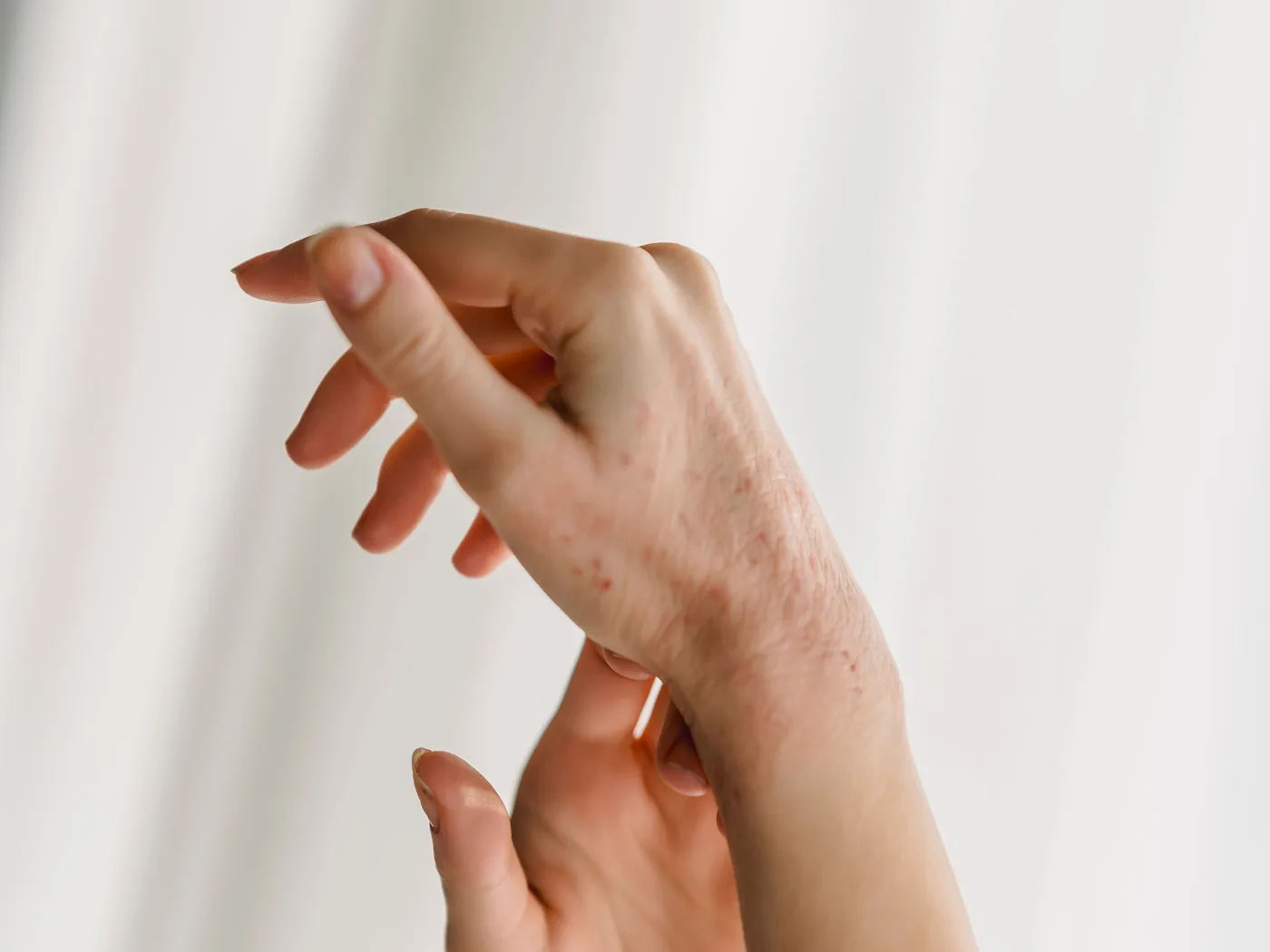
Does any of this sound like your skin?
- Hives that keep coming back without an obvious cause
- Eczema that improves with creams and returns as soon as you stop
- A rash nobody has been able to explain
- Skin that reacts to something you have not been able to identify
What a skin evaluation here can involve
Finding the trigger
The evaluation is aimed at determining what is setting the skin off in addition to long term treatment planning.
Testing in the clinic
Allergy testing on the same day of visit and future chemical patch testing if needed.
An immunology perspective
Chronic skin reactions are often an immune question. This question is targeted during the workup.
A written plan
What was found, what it means and what to do next — on paper, before you leave.
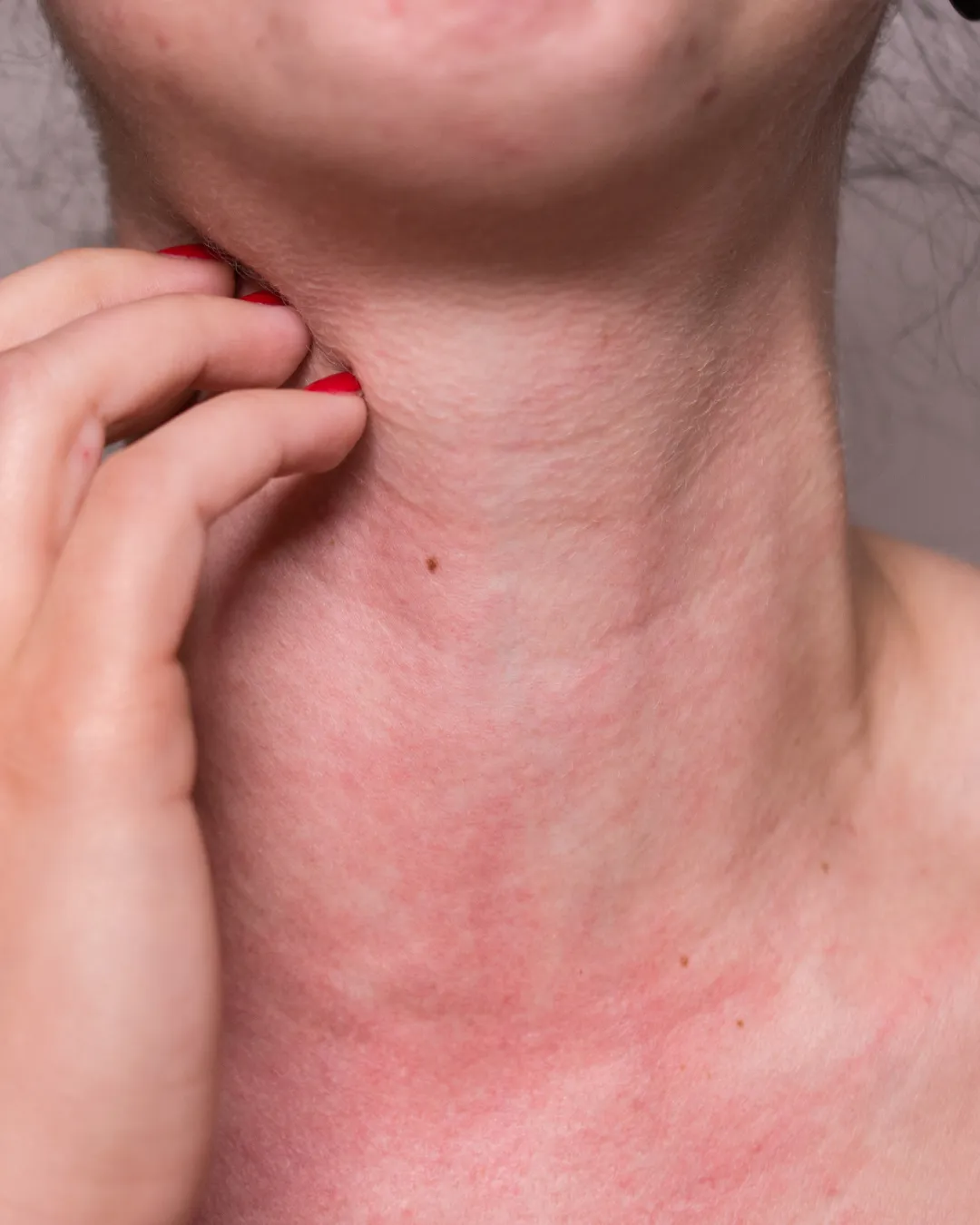
Should you see an allergist or a dermatologist?
Both specialties treat skin, and for many conditions either is a reasonable place to start. The difference is in the question each is trained to ask.
A dermatologist is a specialist in the skin itself — its structure, its diseases, and the treatments that act on it directly. For a rash that needs to be identified by appearance, a lesion that needs a biopsy, or a skin condition that needs topical or systemic treatment, that is exactly the right expertise.
An allergist and immunologist is a specialist in the immune system, and looks at skin as one place where an immune process shows up. The question is what is provoking the reaction — a food, an environmental allergen, something contacting the skin, a medication, or an internal immune process that is not driven by an external trigger at all.
In practice, it comes down to this.
See an allergist first
- Hives lasting more than six weeks
- Eczema that keeps returning after treatment stops
- A rash that appears where something touches the skin
- Any skin reaction with a suspected food or drug trigger
- Skin symptoms accompanied by breathing symptoms or swelling
See a dermatologist first
- A changing mole, or a lesion that needs examining
- Acne
- Psoriasis
- Hair or nail disease
- Any rash requiring a biopsy to identify
Frequently the answer is both, working on different parts of the same problem. Where a case belongs with dermatology, we say so and help arrange it — and the same works in reverse, since a good deal of chronic urticaria arrives here from dermatology after topical treatment has not resolved it.

Chronic hives (chronic urticaria)
Hives lasting more than six weeks are called chronic urticaria, and it behaves differently from the acute hives that follow an obvious exposure.
A substantial proportion of chronic urticaria is autoimmune, where the immune system is acting on the skin's mast cells without an outside allergen involved. Allergy testing may be indicated to look for triggers but will often accompany blood testing to rule out more involved, underlying causes.
What is ruled out
- Physical triggers — pressure, cold, exercise
- Thyroid disease
- Medications
- An underlying condition, in a small number of cases
Treatment usually begins with second-generation antihistamines, often at doses above what is on the packet, which is well established in guidelines for this condition. Where that is not sufficient, a biologic approved specifically for chronic spontaneous urticaria is administered here. Most patients get to good control. What matters is being told what the condition actually is, rather than being cycled through elimination diets that were never going to help.
Eczema and what drives it
Atopic dermatitis is a barrier problem and an immune problem at the same time. The skin loses water more readily than it should and lets irritants through more easily, and the immune system in the skin is primed to overreact to what gets in.
That is why treatment works on both sides at once — restoring the barrier with consistent moisturizing and appropriate bathing practice, and calming the immune response with topical treatment during flares. Where allergy is a genuine contributor, identifying it adds a third lever, though it is worth being clear that food allergy drives eczema in a minority of cases, mostly in young children with moderate to severe disease.
For eczema that does not respond to topical treatment, there are now four approved biologics, and they are evaluated and administered here. The section below sets out what each one blocks.
Biologic therapy for eczema and chronic hives
Biologics are for disease that stays active despite correct use of topical treatment. They are injected antibodies that block a single step in the inflammatory process, and which one is appropriate depends on what is driving the disease — the pathways behind atopic dermatitis are not the ones behind chronic hives, and the drugs are not interchangeable between them.
- Dupixent (dupilumab)
- targets the interleukin-4 and interleukin-13 pathways, and is approved for atopic dermatitis from six months of age. It is the same drug used for asthma and for chronic sinus disease with nasal polyps, which makes it useful for patients who have more than one of those at once.
- Adbry (tralokinumab)
- binds interleukin-13 itself rather than the receptor, and is approved for moderate-to-severe atopic dermatitis in adults and adolescents from twelve.
- Ebglyss (lebrikizumab)
- also targets interleukin-13, and after the initial phase is given once a month rather than fortnightly — the least frequent dosing of the eczema biologics.
- Nemluvio (nemolizumab)
- blocks the interleukin-31 receptor, which is the pathway most directly associated with itch rather than with the rash itself. It is approved for atopic dermatitis and for prurigo nodularis, and is the newest of the four.
- Xolair (omalizumab)
- targets IgE and is the long-established biologic for chronic spontaneous urticaria, not for eczema. It is the same drug used for allergic asthma.
Deciding among them requires a review of your history, what has already been tried and for how long, and bloodwork where it is relevant. That evaluation is done here rather than referred out, and these are then self-administered at home. Biologics carry their own risks and monitoring requirements, which are discussed in full before starting.
Every fee is published before you book — what testing costs sets out the figures for this. When the answer turns out to be a program rather than a prescription, four different immunotherapy treatments become options to assist your symptoms. What a first visit involves walks through the visit itself, and Dr. Stanga runs all of it — the evaluation, the testing and the plan.
WHAT YOU LEAVE WITH
An explanation for skin that keeps reacting, and a plan built around the cause rather than the most recent flare.




Questions about eczema, hives and rash
How long do hives have to last before they are called chronic?
Six weeks. Under that is acute urticaria, which usually has an identifiable cause. Over it is chronic urticaria, which usually does not — and which is treated on that basis.
Will testing find what is causing my hives?
Frequently not, and that is worth knowing before you start. In most chronic cases no external allergic trigger is found, because a large share of chronic urticaria is autoimmune rather than allergic. Targeted testing is done where the history points somewhere specific. Broad food panels in someone with daily hives usually produce false leads rather than answers.
Can food allergy cause eczema?
In a minority of cases, mostly young children with moderate to severe eczema, food allergy is a genuine contributor. In older children and adults it rarely is. Eliminating foods without evidence tends to make things harder without improving the skin.
What is patch testing and do I need it?
Patch testing looks for delayed allergic reactions to things that touch the skin — nickel, fragrances, preservatives, rubber accelerators. It is worth doing for rashes in a pattern matching contact with something, and for eczema that has not responded to treatment. It is a three-appointment process and costs $499. It is not included in the eczema and contact dermatitis evaluation, which is priced separately.
Should I see a dermatologist instead?
For a lesion that needs identifying or a biopsy, yes. For chronic hives, recurring eczema, or a rash where an allergic trigger is suspected, an allergist is the better first stop. Where a case belongs with dermatology we say so and help arrange it.
Do you offer biologics for skin conditions?
Yes. Omalizumab for chronic hives, and dupilumab and related biologics for atopic dermatitis, are evaluated and administered here.
A different approach to allergy treatment starts here
Enrollment takes about two minutes. We'll confirm your visit within one business day and send everything you need beforehand.