
RapImmune® — intralymphatic immunotherapy
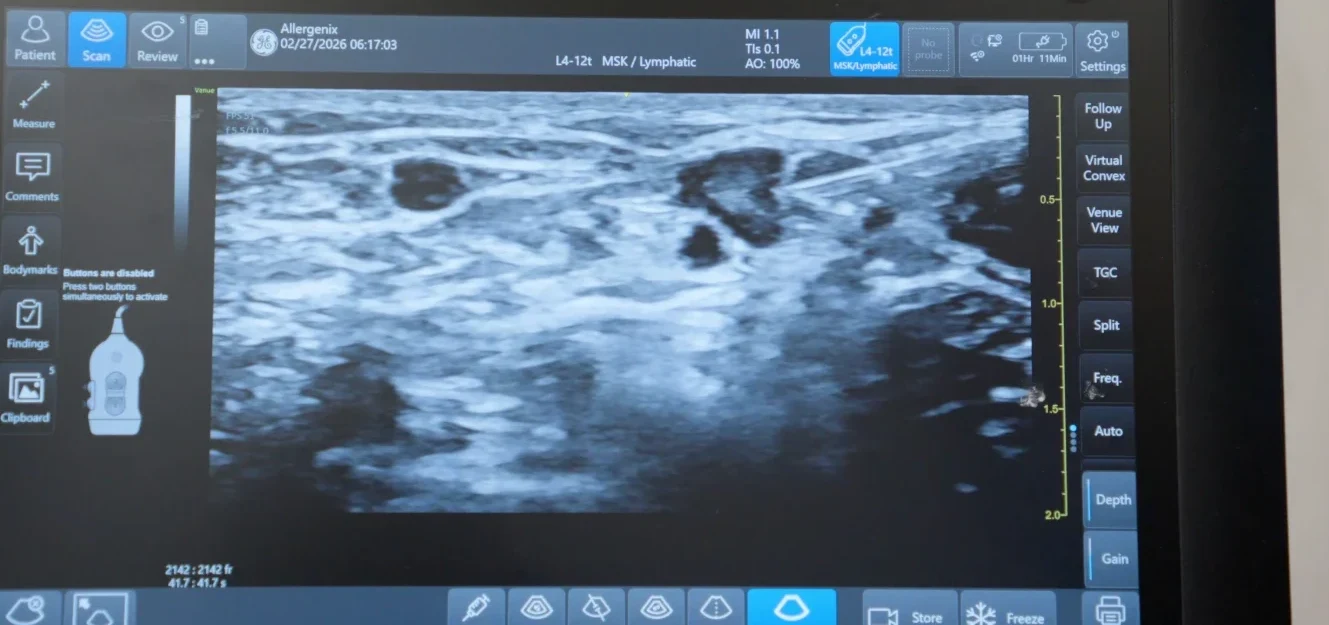
RapImmune is Allergenix's intralymphatic immunotherapy program: small doses of allergen placed directly into a lymph node under ultrasound guidance, rather than injected into the arm over a period of years. The full course is three injections over about eight weeks, with consultations, lymphatic mapping and follow-up care included in one $3,500 fee. It is designed for environmental allergy — pollen, dust mites, pets and molds.
Traditional allergy shots often mean 100+ injections over three to five years. RapImmune is our ILIT program — a tiny amount of allergen placed directly into a lymph node under ultrasound guidance, in three visits over about two months.
- 3
- visits, over about two months
- 1–2
- injections per session
- Ultrasound
- guided, into a lymph node

Is intralymphatic immunotherapy the right route for you?
- You have looked at allergy shots and stalled at three to five years of them
- Twice weekly clinic visits do not fit your work or your travel
- You are already on shots or drops and are not finding relief
- You want the treatment that targets the cause rather than the symptoms
What RapImmune actually involves
Consultation and lymphatic mapping
Your testing is reviewed and the injection site is mapped individually before anything is given.
Ultrasound-guided injection
One to two injections per session, placed into the lymph node under high-definition ultrasound guidance by the physician.
Three sessions, about two months
The full program is three visits across roughly two months, rather than a weekly schedule running for years.
Oversight throughout
Continuous physician oversight for the whole protocol, and every follow-up visit related to your RapImmune care.
WHAT IT DOESN’T COVER
RapImmune is for environmental allergens — pollen, dust mites, pets and molds. It is not a food allergy treatment, and it is not a venom treatment; those are separate programs.
RapImmune®
$3,500 flat, one time
Available for adults and children, depending on the maturity of the child.
RapImmune uses FDA-approved allergen extracts. The injection into the lymph node itself is not FDA-approved.
What the fee covers
- In-depth consultation and personalized lymphatic mapping
- High-definition ultrasound guidance for every injection
- Precision, physician-delivered intralymphatic placement
- Booster injections where clinically indicated
- All follow-up visits and care related to your RapImmune® program

Why the injection goes into a lymph node
RapImmune is a physician-delivered intralymphatic immunotherapy program. Instead of repeated injections into the arm over years, small doses of allergen are placed directly into a lymph node under high-definition ultrasound guidance — targeting the immune system where tolerance is built.
Lymph nodes are where immune responses are coordinated, so delivering the dose there means far less of it is needed and far fewer doses are required.
RapImmune (intralymphatic)
- Injected into a lymph node, under ultrasound guidance
- Three injections
- About two months
Allergy shots (subcutaneous)
- Injected under the skin, usually in the arm
- 100+ injections
- Three to five years
As of 2026, we are not aware of another practice in Iowa or much of the upper midwest offering ultrasound-guided intralymphatic immunotherapy.

What the evidence shows
ILIT is a newer immunotherapy approach that uses FDA-approved allergen extracts delivered by an off-label route — intralymphatic injection. The most comprehensive systematic review and meta-analysis to date pooled data from 15 randomized trials involving 582 patients, with cumulative enrollment across all published ILIT trials now estimated at approximately 800 participants.
- 15
- randomized trials in the largest pooled analysis
- 582
- patients across those trials
- ~800
- participants in all published ILIT trials
The evidence base is smaller and more recent than that supporting traditional allergy shots, which have been studied extensively for over a century.
Pooled analyses of randomized trials report a moderate reduction in combined symptom and medication scores compared with placebo, alongside improvement in quality of life.
Safety, as the trials record it
In published trials most adverse events have been local and mild.
- 98.4%
- of recorded adverse events graded mild, across seventeen trials
- 7.3%
- local reactions on treatment, against 2.7% on placebo
- 2
- cases of anaphylaxis, in 582 patients across 15 trials
Serious reactions are rare but occur less often than traditional allergy shots.
At every session here
- Every injection is ultrasound-guided
- Dosing is conservative
- You are observed afterward
- Epinephrine is immediately available
Off-label, and what that means
The allergen extracts used are FDA-approved. Injecting them into a lymph node is not an FDA-approved route of administration, which makes RapImmune an off-label use of an approved product.
Off-label use is legal and common in medicine. Dr. Stanga will cover it during your consultation.
Questions about RapImmune
What is intralymphatic immunotherapy?
Intralymphatic immunotherapy, or ILIT, delivers allergen directly into a lymph node rather than under the skin. Lymph nodes are where immune responses are coordinated, so delivering the dose there means far less of it is needed and far fewer doses are required. The result is a three-injection course over about two months rather than years of weekly or monthly shots.
How is the injection actually given?
Under ultrasound guidance, into a lymph node in the upper, outer thigh. The ultrasound is what makes it precise — the physician can see the node and the needle throughout. Most patients describe the pain as less than a blood draw. Each session involves one to two injections.
Does it hurt?
Less than most people expect. The lymph node itself has no meaningful pain sensation; the sensation is the needle passing through skin. The ultrasound guidance means no probing for the target.
What does the research show?
Research on intralymphatic immunotherapy shows promising results, including meaningful reductions in allergy symptoms and medication use with far fewer treatment visits than traditional allergy shots. Multiple studies have demonstrated benefit, and the overall evidence supports ILIT as an effective option for appropriately selected patients. As with any medical treatment, results can vary, and Dr. Stanga will review the evidence, expected benefits, and whether RapImmune® is a good fit for you.
Is it safe?
In published trials most adverse events have been local and mild, and serious reactions are rare but not absent. The recorded figures are set out under “Safety, as the trials record it” above. At Allergenix every injection is ultrasound-guided, dosing is conservative, you are observed afterward, and epinephrine is immediately available.
Is RapImmune FDA approved?
The allergen extracts used are FDA-approved; injecting them into a lymph node is not an FDA-approved route of administration, which makes RapImmune an off-label use of an approved product. Off-label use is legal and common in medicine. What that means in practice is set out under “Off-label, and what that means” above, and Dr. Stanga will cover it during your consultation.
What does it treat?
Environmental allergens — pollens, dust mites, animal dander and molds. It is not a food allergy treatment and it is not a treatment for stinging insect allergy. Those run as separate programs.
How does it compare with allergy shots?
Three visits over two months against roughly a hundred injections over three to five years. Allergy shots have decades more evidence behind them and are an FDA-approved route. The full side-by-side comparison is on its own page.
What if it does not work?
Most patients pursue RapImmune® because they want meaningful improvement without committing to years of allergy shots. If your response is not as strong as hoped, there are still several effective options available. Dr. Stanga will reassess your symptoms and allergy pattern and help decide whether another immunotherapy approach would be worthwhile.
Who should not have it?
RapImmune is not appropriate during pregnancy, for people with uncontrolled asthma, for anyone on a beta blocker without a plan to address it, or for people whose testing does not show a clear environmental sensitization matching their symptoms. The consultation exists partly to establish whether you are a candidate at all.



A different approach to allergy treatment starts here
Enrollment takes about two minutes. We'll confirm your visit within one business day and send everything you need beforehand.