
Allergy drops, taken at home
Environmental sublingual immunotherapy — allergy drops for environmental allergies — delivers allergen under the tongue rather than by injection. You take three drops a day at home, on a program formulated from your own test results and supervised by a board-certified allergist. It is a three-to-five-year commitment like allergy shots, and the trade-off is daily consistency at home in exchange for not coming to the clinic for injections.
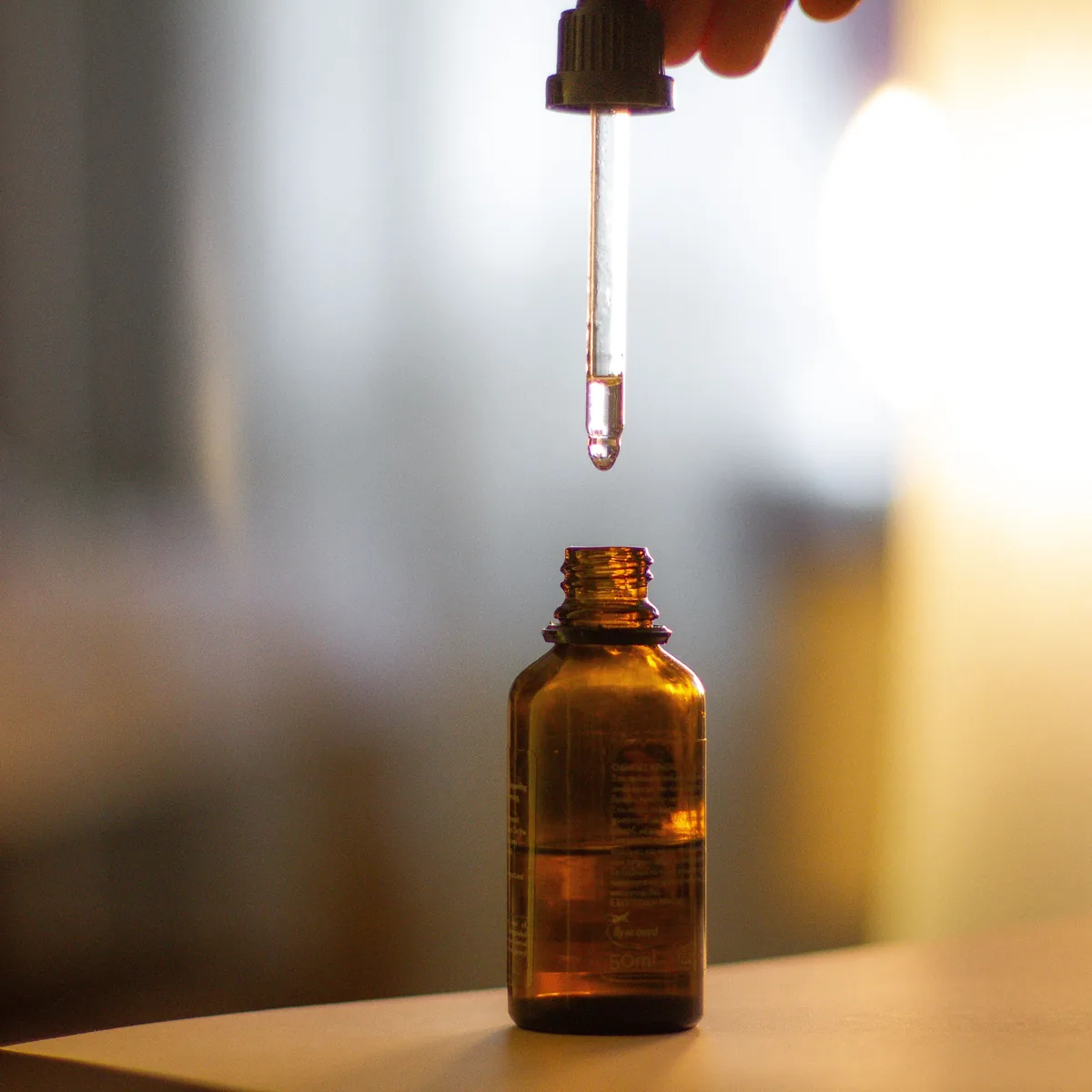
Sublingual immunotherapy is the needle-free route: three drops a day under the tongue, taken at home, on a program designed and supervised by a board-certified allergist and immunologist.
- Needle-free
- three drops a day, at home
- 12 weeks
- structured build-up
- Telehealth
- available, as well as in person

Are allergy drops the right route for you?
- Needles are the reason you have not started immunotherapy
- Getting to a clinic on a schedule is the hard part, not the treatment
- You are treating a child who will not sit for a weekly injection
- You live far enough out that telehealth changes whether this is realistic
What allergy drops actually involve
Custom formulation
Small, fresh batches formulated individually — allergen-dense vials with active allergen rather than filler.
Science-based selection
Allergens are selected using cross-reactivity and immune tolerance data.
A 12-week build-up
A structured four-week build-up, then once-daily maintenance drops at home.
Physician-supervised
Designed and supervised by a board-certified allergist and immunologist only, in person or by telehealth.
WHAT IT DOESN’T COVER
Drops are for environmental allergens. Food allergy uses a separate sublingual program with its own build-up and fee.

Allergy Drops (SLIT)
$1,900 per year, flat
Environmental allergy drops are a three-to-five-year program, the same commitment as allergy shots. The difference is where the doses happen — at home, daily, rather than in the clinic on a schedule.
What the fee covers
- All serum preparation, mixed individually for you
- Science-based allergen selection using cross-reactivity and immune tolerance data
- A structured build-up, then once-daily maintenance drops at home
- Every in-person and telehealth follow-up visit related to the program
- Shipping to your door
Questions about allergy drops
How do allergy drops compare with allergy shots?
Both build tolerance to the same allergens over three to five years. Shots are given in the clinic and have a considerably larger body of published evidence behind them. Drops are taken at home, avoid needles entirely, and have a favorable safety profile — systemic reactions are rare compared with injections. The trade-off is consistency: drops only work if they are taken daily, and that is on you rather than on the clinic schedule.
What do the drops taste like?
Mildly sweet — the extracts are in a glycerin base. Most children take them without difficulty, which is a large part of why parents choose them.
When do I take them, and what if I forget a dose?
Three drops under the tongue, held for a minute or two before swallowing, at the same time each day. Missing an occasional dose is not a problem. Missing many in a row means the dose may need adjusting, so tell us rather than restarting on your own.
Are they safe for young children?
Sublingual immunotherapy has a good safety record in children and is frequently the practical choice where injections are not realistic. The most common side effects are mild itching or tingling in the mouth during the first weeks, which typically settles.
Can I do this if I live outside Des Moines?
Yes, and it is one of the reasons drops suit people at a distance. Testing has to happen in the clinic, but the program itself is managed by telehealth, and drops are shipped to you.
Are drops covered by insurance?
Allergenix does not bill insurance for anything. The program is $1,900 per year, flat, which covers the formulation, the vials, the supervision, every follow-up visit and shipping to your door. There is no start-up fee and no monthly charge.



About the regulatory status of allergy drops
Sublingual immunotherapy is well established internationally and is widely used in Europe. In the United States, the FDA has approved several sublingual tablets for specific allergens — grass, ragweed and dust mite among them. The custom-compounded liquid drops used here are prepared from FDA-approved allergen extracts, but this route of administration has not been separately approved by the FDA, which makes it an off-label use. Off-label prescribing is legal and common.
A different approach to allergy treatment starts here
Enrollment takes about two minutes. We'll confirm your visit within one business day and send everything you need beforehand.