
Penicillin Allergy Testing: How It Works and Why It Matters
Learn how penicillin allergy testing works, who should get tested, and why removing an incorrect allergy label can improve antibiotic treatment.
Learn how penicillin allergy testing works, who should get tested, and why removing an incorrect allergy label can improve antibiotic treatment.
Penicillin Allergy Testing: Process, Benefits & Cost
Many people who believe they are allergic to penicillin may not have a true allergy.
According to the Centers for Disease Control and Prevention (CDC), approximately 10% of Americans report a penicillin allergy, but fewer than 1% of the population are truly allergic.
Most reported penicillin allergies are not confirmed by testing.
Penicillin allergy testing helps determine whether a reported allergy is accurate and whether penicillin-based antibiotics can be used safely. The evaluation may involve reviewing your medical history, performing skin tests, or conducting a supervised oral medication challenge.
For patients with an incorrect allergy diagnosis, testing can help remove unnecessary restrictions and provide access to appropriate antibiotic treatments.
Why Are Penicillin Allergies Often Misdiagnosed?
Many penicillin allergy labels originate from childhood reactions that were never formally evaluated. Some reactions attributed to antibiotics may have been caused by viral infections, medication side effects, or other factors.
Many labels come from childhood reactions that were never formally evaluated.
- Childhood rashes. Rashes during antibiotic treatment may stem from an underlying viral infection rather than a drug allergy.
- Medication side effects. Nausea, diarrhea, and stomach discomfort are common antibiotic side effects, not necessarily an allergic reaction.
- Family history. Having a relative with a penicillin allergy does not automatically mean you are allergic.
- Unconfirmed reactions. Some patients have an allergy documented without knowing what originally caused the reaction.
Common reasons for an incorrect penicillin allergy diagnosis include:
Childhood rashes:
Skin rashes occurring during antibiotic treatment may be related to an underlying viral infection rather than a drug allergy.
Medication side effects:
Nausea, diarrhea, and stomach discomfort are common antibiotic side effects but do not necessarily indicate an allergic reaction.
Family history:
Having a relative with a penicillin allergy does not automatically mean you are allergic.
Unconfirmed reactions:
Some patients have an allergy documented in their medical records without knowing what originally caused the reaction.
Why Is Penicillin Allergy Testing Important?
An incorrect penicillin allergy label can affect the antibiotics prescribed for future infections.
Penicillin and related antibiotics, including amoxicillin, are commonly recommended for treating various bacterial infections.
When a patient is labeled allergic, healthcare providers may need to prescribe alternative medications.
These alternatives can sometimes result in:
- Less effective treatment: Alternative antibiotics may not be the preferred option for certain infections.
- Increased antibiotic resistance: Some broader-spectrum antibiotics contribute to antimicrobial resistance.
- Higher treatment costs: Alternative medications may be more expensive.
- Increased risk of complications: Studies have associated inaccurate penicillin allergy labels with certain infections and other adverse healthcare outcomes.
How Does Penicillin Allergy Testing Work?
Penicillin allergy testing is performed under medical supervision to evaluate whether a patient can safely receive penicillin-based medications.
The process generally involves the following steps, depending on the patient's allergy history and risk level.
A supervised, step-by-step evaluation based on your allergy history and risk level.
- 1Medical history and risk assessmentYour allergist reviews your previous reaction to penicillin or related antibiotics and your risk level.
- 2Penicillin skin testingSmall amounts of penicillin-related substances are applied to or introduced into the skin; a negative test substantially reduces the likelihood of an immediate allergy.
- 3Supervised oral amoxicillin challengeYou take a controlled dose of amoxicillin while monitored by a healthcare professional to confirm tolerance.
1. Medical History and Risk Assessment
The evaluation begins with a review of your previous reaction to penicillin or related antibiotics.
Your allergist may ask:
- What symptoms occurred during the reaction?
- How long ago did the reaction happen?
- How soon after taking the medication did symptoms appear?
- Did the reaction require emergency treatment?
- Have you taken penicillin or amoxicillin since then?
2. Penicillin Skin Testing
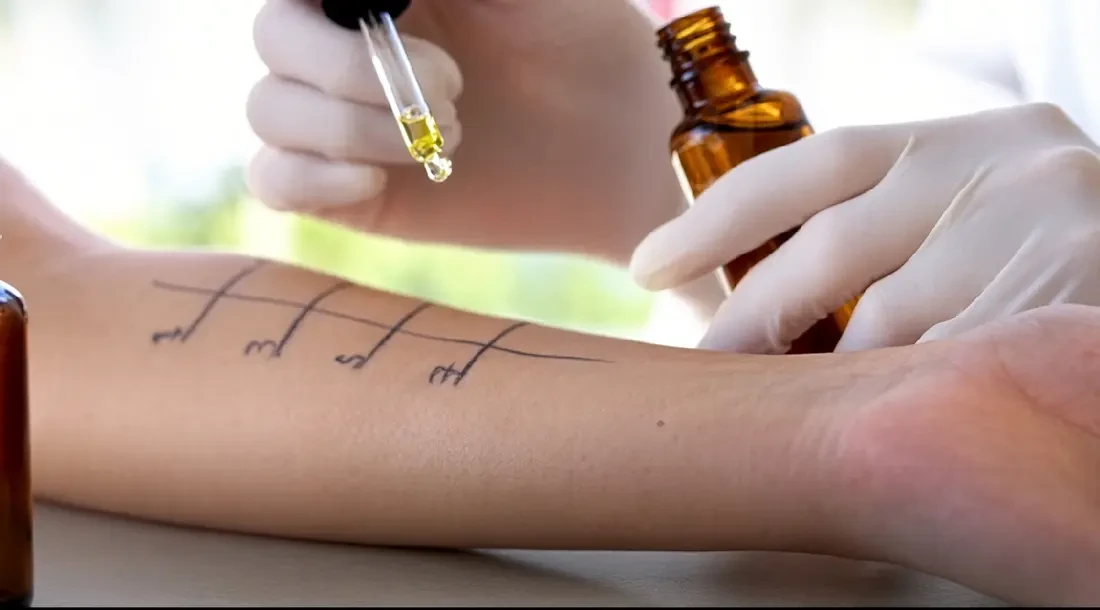
Skin testing may be recommended for patients whose medical history suggests a possible immediate allergic reaction.
During testing, small amounts of penicillin-related substances are applied to or introduced into the skin.
The allergist monitors for reactions that could indicate allergic sensitivity.
A negative skin test substantially reduces the likelihood of an immediate penicillin allergy. An oral challenge may then be recommended to confirm the result.
3. Supervised Oral Amoxicillin Challenge
An oral challenge involves taking a controlled dose of amoxicillin while being monitored by a healthcare professional.
This procedure helps determine whether the medication can be tolerated without an immediate allergic reaction.
For patients with a low-risk allergy history, an allergist may recommend a direct oral challenge without performing skin testing first.
All oral challenges must be conducted in an appropriate medical setting with personnel and medications available to manage potential allergic reactions.
Who Should Consider Penicillin Allergy Testing?
Testing may be appropriate for individuals who:
- Were diagnosed with a penicillin allergy during childhood.
- Experienced a mild rash without other serious symptoms.
- Have an allergy label but cannot remember the original reaction.
- Were labeled allergic because of nausea or other medication side effects.
- Have avoided penicillin for many years without confirming the allergy.
- Want to clarify their antibiotic allergy history before future medical treatment.
Who Should Avoid Routine Penicillin Allergy Testing?
Patients with a history of severe reactions require a different approach.
Conditions such as: Stevens-Johnson syndrome (SJS), toxic epidermal necrolysis (TEN), or drug reaction with eosinophilia and systemic symptoms (DRESS) are generally contraindications to routine penicillin skin testing and oral challenges.
Patients with a history of anaphylaxis also require careful specialist assessment before any testing or challenge is considered.
Never attempt to test a suspected penicillin allergy by taking the medication at home.
What Happens After a Negative Penicillin Allergy Test?
If testing confirms that you can tolerate penicillin, your allergist may recommend removing the inaccurate allergy label from your medical records. This process is called penicillin allergy de-labeling.
After successful evaluation:
- Your allergy documentation can be updated.
- Your primary care physician and other healthcare providers can be informed.
- Penicillin-based antibiotics may become available for future infections when medically appropriate.
- Unnecessary restrictions on antibiotic selection may be avoided.
Patients should ensure that updated allergy information is shared with their healthcare providers, pharmacies, and other relevant medical facilities.
A negative evaluation indicates that penicillin can be tolerated under the conditions tested. It does not guarantee that a new allergy can never develop.
Penicillin Allergy Testing in West Des Moines, Iowa
At Allergenix Allergy & Immunology, Dr. Sean Stanga provides penicillin allergy evaluations for patients in West Des Moines and surrounding Central Iowa communities.
The clinic offers an Antibiotic Allergy De-Labeling evaluation for $499, which includes:
- A physician consultation and medical history review
- Penicillin skin testing when indicated
- A supervised oral medication challenge when appropriate
- Documentation and allergy-label updates following successful evaluation
Allergenix operates as a direct specialty care clinic with transparent pricing and no insurance billing.
If you have a documented penicillin allergy that has never been confirmed, a professional evaluation can help determine whether the label is accurate.
Schedule a penicillin allergy testing appointment at Allergenix or call 515-644-8448 to learn more about the evaluation process.
Frequently Asked Questions About Penicillin Allergy Testing
Is penicillin allergy testing safe?
Penicillin allergy testing is generally safe when performed by qualified healthcare professionals using appropriate protocols. Your allergist assesses your reaction history before determining which tests are suitable. Medical supervision is provided during procedures that could trigger an allergic reaction.
How long does penicillin allergy testing take?
Appointment length depends on the testing required. A medical history review, skin testing, and supervised oral challenge may take several hours when performed together. Your allergist can explain the expected duration before your appointment.
Can a penicillin allergy go away over time?
Yes. Some people with a genuine penicillin allergy lose their sensitivity over time. Approximately 80% of individuals with IgE-mediated penicillin allergy become less sensitive after 10 years. Testing can help determine whether the allergy is still present.
Can I get tested if I had a penicillin allergy as a child?
Yes, many adults with a childhood penicillin allergy label are candidates for evaluation. Your allergist will review the original reaction and determine whether skin testing or a supervised oral challenge is appropriate.
How much does penicillin allergy testing cost?
At Allergenix in West Des Moines, the Antibiotic Allergy De-Labeling evaluation costs $499. The program includes a physician assessment and appropriate testing, with a supervised medication challenge when indicated.
What if my penicillin allergy test is negative?
If testing confirms that you can tolerate penicillin, your allergist may remove the inaccurate allergy label from your medical records. This allows healthcare providers to consider penicillin-based antibiotics for future infections when appropriate.
Also on the blog
- Allergy TestingWhat a 47-Allergen Skin Test Actually Checks ForA 47-allergen environmental skin test takes about 20 minutes. See what each category covers, what a positive result means, and what your plan should say.

- Allergy TestingAt-Home Allergy Test Kits vs. Testing With an AllergistAt-home allergy kits measure something real, but IgG panels aren't allergy tests. What mail-in results can and can't tell you, and what an allergist adds.
- Allergy TestingWhat Happens During a Supervised Oral Food ChallengeAn hour-by-hour look at a supervised oral food challenge: how you prepare, how doses are stepped up, what staff watch for, and what the results really mean.
A different approach to allergy treatment starts here
Book your visit online in a few minutes and pick a time that suits you. Have a question first? Send us a message or call the clinic.