
Pet Allergy Treatment Options in West Des Moines, IA
Explore pet allergy treatment options for dog and cat allergies, including medications, allergy testing, immunotherapy, and ways to reduce allergens at home.
Explore pet allergy treatment options for dog and cat allergies, including medications, allergy testing, immunotherapy, and ways to reduce allergens at home.
How to Manage Allergies Without Giving Up Your Pet?
Living with a dog or cat allergy can be challenging, symptoms such as sneezing, nasal congestion, itchy eyes, and coughing can interfere with daily activities and make spending time at home uncomfortable.
Fortunately, several pet allergy treatment options can help reduce symptoms and improve your ability to live comfortably with your pet. These include environmental allergen control, antihistamines, nasal corticosteroids, and allergy immunotherapy.
The most effective approach depends on the severity of your symptoms, your specific allergy triggers, and your response to treatment. An allergist can help confirm whether your pet is contributing to your symptoms and develop a personalized management plan.
What Causes Pet Allergies?
Pet allergies occur when the immune system reacts to proteins produced by animals. These proteins are commonly found in pet dander (tiny flakes of skin), saliva, and urine.
Contrary to popular belief, pet hair itself is not usually the primary cause of an allergic reaction. However, fur can carry allergens throughout the home.
Common pet allergens include:
- Cat allergens: Fel d 1 is a major allergen produced by cats and is commonly found in saliva and skin secretions.
- Dog allergens: Dogs produce several allergenic proteins, including Can f 1, which can be present in dander and saliva.
- Airborne allergens: Pet allergens can attach to small particles that remain suspended in the air and settle on furniture, carpeting, bedding, and clothing.
Exposure to these proteins can trigger symptoms in individuals who have developed an allergic sensitivity.
Because pet allergens can accumulate indoors, symptoms may continue even when you are not directly touching your dog or cat.
Common Symptoms of Pet Allergies
Pet allergy symptoms vary depending on the individual and the level of exposure.
Reactions that vary by individual and level of exposure.
- Sneezing and a runny nose.
- Persistent nasal congestion.
- Itchy, watery, or red eyes.
- Post-nasal drip.
- Coughing.
- Itchy skin or hives after contact.
- Wheezing or shortness of breath in individuals with allergic asthma.
Common symptoms include:
- Sneezing and a runny nose
- Persistent nasal congestion
- Itchy, watery, or red eyes
- Post-nasal drip
- Coughing
- Itchy skin or hives after contact
- Wheezing or shortness of breath in individuals with allergic asthma
Symptoms may occur shortly after exposure or develop gradually with ongoing contact.
If you experience frequent symptoms at home, an allergy evaluation can help determine whether your pet or another environmental allergen is responsible.
How Are Pet Allergies Diagnosed?
Before starting treatment, it is important to determine whether your dog or cat is actually causing your symptoms.
Pet allergies can produce symptoms similar to those caused by other environmental allergens, including pollen, dust mites, and mold.
An allergist may recommend the following diagnostic methods.
Skin Prick Testing
Skin prick testing helps identify allergic sensitivities by exposing the skin to small amounts of suspected allergens.
A reaction, such as a raised, itchy bump, may indicate sensitivity to a particular allergen.
Specific IgE Blood Testing
Specific IgE blood testing measures antibodies associated with allergic sensitivity to particular substances, including dog and cat allergens.
Blood testing may be recommended when skin testing is unsuitable.
A positive allergy test does not automatically mean that an allergen is responsible for a person's symptoms. Results must be interpreted alongside medical history and exposure patterns.
At Allergenix in West Des Moines, Iowa, the Environmental Allergy Evaluation includes a consultation, indicated testing, and a written treatment plan for a published price of $450.
Testing can help identify whether pet allergens or other environmental triggers are contributing to your symptoms.
Pet Allergy Treatment Options: What Works?
Treatment for pet allergies generally focuses on reducing allergen exposure, controlling symptoms, and modifying the immune response when appropriate.
The following options may be recommended individually or in combination.
Reducing exposure, controlling symptoms, and adjusting the immune response.
- 1Reduce pet allergen exposure at homeKeep pets out of bedrooms, use HEPA air purifiers, clean carpets and furniture, and wash bedding.
- 2AntihistaminesBlock histamine to relieve sneezing, runny nose, and itchy eyes; they do not eliminate the allergy.
- 3Nasal corticosteroid spraysReduce inflammation inside the nasal passages for persistent congestion; regular use works best.
- 4Additional medication for eye and asthma symptomsAntihistamine eye drops for itchy eyes, and inhaled medications for allergic asthma under a medical plan.
1. Reduce Pet Allergen Exposure at Home
Reducing allergen exposure is an important part of managing pet allergies, particularly when the animal remains in the household.
Although completely eliminating pet allergens is difficult, several changes may help lower indoor exposure.
Keep pets out of bedrooms
Bedrooms should ideally remain pet-free to help reduce exposure while sleeping.
Pet allergens can accumulate in mattresses, pillows, blankets, and other fabrics, making the bedroom an important area to manage.
Use HEPA air purifiers
High-efficiency particulate air (HEPA) filtration can help remove airborne particles carrying pet allergens.
Consider using an appropriately sized HEPA air purifier in the bedroom or main living area.
Clean carpets and upholstered furniture
Pet allergens collect in carpeting, rugs, curtains, and upholstered furniture.
Regular vacuuming with a HEPA-filtered vacuum cleaner and cleaning household surfaces may help reduce allergen accumulation.
Wash bedding regularly
Wash bedding and other washable fabrics frequently to remove accumulated allergens.
Practice appropriate pet hygiene
Wash your hands after handling pets and avoid touching your eyes or face immediately after contact.
Regular pet grooming may temporarily reduce some allergens, although grooming alone is unlikely to provide lasting symptom control. If possible, have a nonallergic household member handle grooming.
These environmental measures may help reduce symptoms, but they are not always sufficient as the only treatment.
2. Antihistamines for Pet Allergy Symptoms
Antihistamines are commonly used to control symptoms associated with pet allergies.
They work by blocking the effects of histamine, a chemical released during allergic reactions.
Oral antihistamines may help relieve:
- Sneezing
- Runny nose
- Itchy eyes
- Itchy nose and throat
- Other mild allergy symptoms
Intranasal antihistamine sprays are another option for managing nasal symptoms.
Antihistamines can provide symptom relief, but they do not eliminate the underlying allergy.
3. Nasal Corticosteroid Sprays
Intranasal corticosteroids are often recommended for individuals experiencing persistent nasal congestion and inflammation caused by pet allergies.
These medications reduce inflammation inside the nasal passages and can improve:
- Nasal congestion
- Runny nose
- Sneezing
- Nasal irritation
Unlike medications that primarily provide short-term relief, nasal corticosteroids help manage the inflammatory response associated with allergic rhinitis.
Regular use as directed is often more effective than occasional use for persistent symptoms.
4. Additional Medication for Eye and Asthma Symptoms
Some individuals experience allergic symptoms beyond nasal congestion.
Antihistamine eye drops may help relieve itchy, watery, or red eyes associated with pet exposure.
For patients with allergic asthma, inhaled medications may be necessary to control airway inflammation and breathing symptoms.
Asthma treatment should follow an individualized medical plan. Frequent wheezing, coughing, or shortness of breath should not be managed with over-the-counter allergy medication alone.
Allergy Immunotherapy for Pet Allergies
When medications and environmental changes are not enough, allergy immunotherapy may help reduce sensitivity to pet allergens over time. Treatment options vary in duration, effectiveness, and availability.
Reducing sensitivity to pet allergens over time when medications are not enough.
- Allergy shots (SCIT). Regular injections under medical supervision, with a build-up and maintenance phase lasting three to five years.
- Allergy drops (SLIT). Needle-free allergens under the tongue at home, offered at Allergenix for $1,900 per year. Customized drops are not FDA-approved.
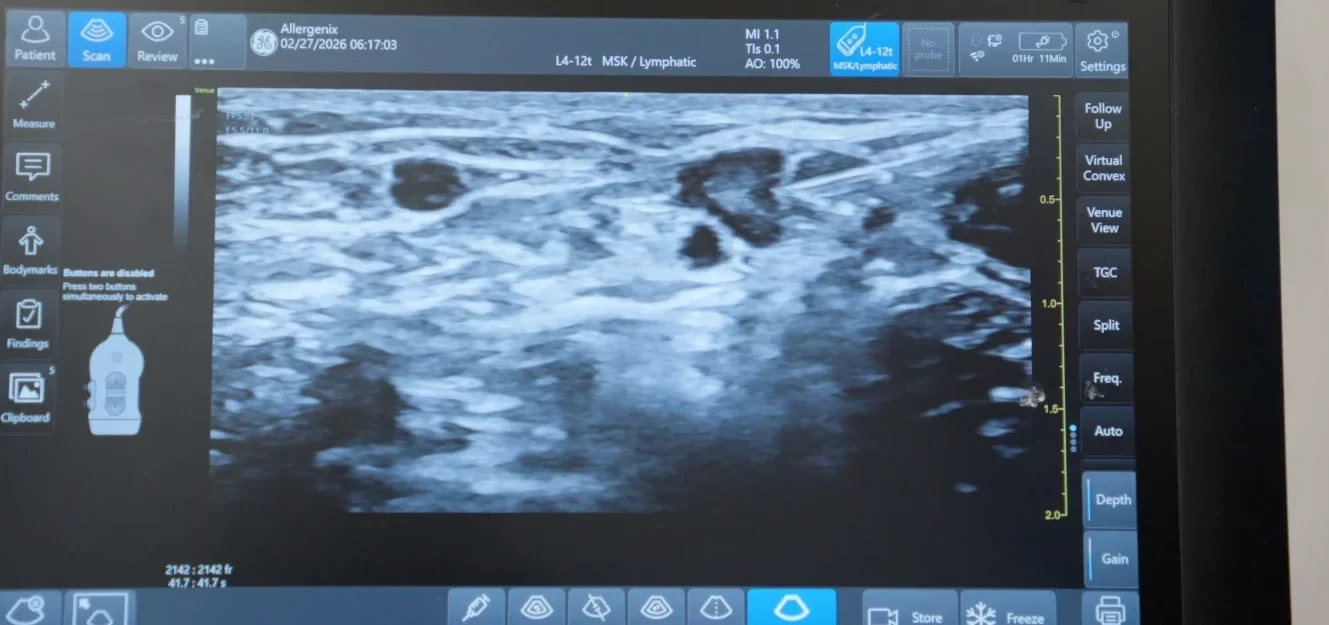
- Intralymphatic immunotherapy (ILIT). RapImmune® delivers three ultrasound-guided injections over about eight weeks for a one-time fee of $3,500.
Allergy Shots (Subcutaneous Immunotherapy)
Allergy shots (SCIT) gradually reduce allergic sensitivity through regular injections administered under medical supervision.
They may improve pet allergy symptoms and reduce medication needs.
Treatment typically includes a build-up and maintenance phase, lasting three to five years.
Allergy Drops (Sublingual Immunotherapy)
Allergy drops (SLIT) deliver allergens under the tongue and can be taken at home, offering a needle-free alternative.
However, customized allergy drops are not FDA-approved in the United States, and evidence for pet allergies is more limited than for allergy shots.
Allergenix offers allergy drops for $1,900 per year, with treatment generally continuing for several years.
Intralymphatic Immunotherapy (ILIT)
Intralymphatic immunotherapy (ILIT) delivers allergens directly into a lymph node to potentially reduce the number of treatment visits.
Allergenix offers RapImmune®, a program involving three ultrasound-guided injections over approximately eight weeks for a one-time fee of $3,500.
ILIT is an emerging treatment, and long-term evidence for pet allergies remains limited. An allergist can help determine whether this approach is appropriate.
Comparing Pet Allergy Treatment Options
The most appropriate treatment depends on symptom severity, confirmed allergens, medical history, and personal preferences.
| Treatment Option | Primary Purpose | Important Considerations |
|---|---|---|
| Environmental allergen control | Reduces exposure to pet allergens | Requires consistent household changes |
| Antihistamines | Relieves sneezing, itching, and runny nose | Controls symptoms but does not change the underlying allergy |
| Nasal corticosteroids | Reduces nasal inflammation and congestion | Regular use may be needed |
| Allergy shots (SCIT) | Reduces allergic sensitivity over time | Requires scheduled injections over several years |
| Allergy drops (SLIT) | Provides a needle-free immunotherapy approach | Customized drops are off-label and not FDA-approved |
| Intralymphatic immunotherapy (ILIT) | Investigational shorter-course immunotherapy approach | Long-term evidence and pet-specific effectiveness remain limited |
When Should You See an Allergist for Pet Allergies?
Consider scheduling an allergy evaluation if:
- You experience frequent nasal congestion, sneezing, or itchy eyes around pets.
- Symptoms interfere with sleep or daily activities.
- Over-the-counter allergy medications are not providing adequate relief.
- You experience recurring symptoms despite cleaning and reducing exposure.
- You have asthma symptoms that worsen around animals.
- You want to explore long-term pet allergy treatment options.
Explore Pet Allergy Treatment Options in West Des Moines, Iowa
At Allergenix, Dr. Sean Stanga provides environmental allergy evaluations for patients in West Des Moines and surrounding Central Iowa communities.
The clinic evaluates allergic sensitivities to common environmental triggers, including dogs, cats, pollen, dust mites, and mold.
The $450 Environmental Allergy Evaluation includes:
- A physician consultation
- Environmental allergy testing, as indicated
- A personalized written treatment plan
Following your evaluation, your allergist can recommend appropriate treatment options based on your symptoms, test results, and medical history.
Allergenix operates as a direct specialty care clinic with transparent pricing and no insurance billing. The clinic also offers environmental allergy immunotherapy programs for eligible patients.
Schedule an Environmental Allergy Evaluation at Allergenix to identify your allergy triggers and discuss treatment options that fit your needs.
Frequently Asked Questions About Pet Allergy Treatment Options
What is the most effective treatment for pet allergies?
The most effective treatment depends on the severity of symptoms and the specific allergens involved. Reducing allergen exposure is an important first step. Nasal corticosteroids, antihistamines, and allergy immunotherapy may also help. An allergist can recommend an individualized treatment plan.
Can you get rid of pet allergies permanently?
There is no guaranteed permanent cure for pet allergies. Allergy immunotherapy can reduce sensitivity and provide lasting symptom improvement for some patients, but results vary. Ongoing exposure management or medication may still be necessary.
Can I keep my dog if I am allergic to it?
Some people can continue living with their dogs by combining environmental changes, medication, and appropriate allergy treatment. However, individuals with severe or poorly controlled asthma may need to reduce exposure more substantially. An allergist can help assess the risks.
Do air purifiers help with pet allergies?
HEPA air purifiers can help reduce airborne particles carrying pet allergens. They are most useful when combined with other measures, including keeping pets out of bedrooms and regularly cleaning floors and furniture.
Are allergy shots effective for cat and dog allergies?
Allergy shots may improve symptoms in appropriately selected patients with confirmed pet allergies. Evidence is stronger for some allergens and treatment protocols than others, so individual results can vary. An allergist can determine whether allergy shots are suitable.
Are allergy drops an option for pet allergies?
Some allergy practices offer customized sublingual allergy drops for pet allergens. However, these drops are not FDA-approved in the United States, and the evidence for pet-specific treatment varies. Patients should discuss the benefits, risks, and alternatives with an allergist.
How do I know if I am allergic to my pet?
An allergist can review your symptoms and exposure history and perform skin prick testing or specific IgE blood testing when appropriate. Test results help identify allergic sensitivities, but they must be interpreted alongside your symptoms to determine whether your pet is responsible.
How much does pet allergy testing cost in West Des Moines?
At Allergenix, the published Environmental Allergy Evaluation price is $450. The evaluation includes a physician consultation, indicated environmental allergy testing, and a written treatment plan.
Also on the blog
- Allergy CareExpert Thanksgiving Food Allergy TipsPractical thanksgiving food allergy tips from a West Des Moines allergist: hidden allergens, what to ask your host, and keeping epinephrine ready.

- Allergy CareWhat Is Sublingual Immunotherapy for Food Allergy?Learn how sublingual immunotherapy for food allergies works, including benefits, risks, SLIT vs. OIT, treatment eligibility, and costs.
- Allergy CareRecurrent Sinus Infections Treatment: Causes, Options, and PreventionExplore recurrent sinus infections treatment options, including allergy testing, nasal sprays, sinus rinses, and when antibiotics may help.
A different approach to allergy treatment starts here
Book your visit online in a few minutes and pick a time that suits you. Have a question first? Send us a message or call the clinic.