The Iowa Physician Who Left the Hospital Behind
After nearly 15 years practicing in North Dakota, Dr. Sean Stanga came home to Iowa to build a different kind of practice and to bring a treatment no one in the region was offering. Here is why he walked away from the hospital model, and what he built instead.
Health care is changing quickly, and not in patients' favor. The wait to see a physician keeps getting longer, and the cost of that care keeps shifting onto families. Dr. Stanga witnessed this firsthand, and his decision to leave the hospital system grew out of years of watching it happen and watching who ended up paying for it.
Nearly 15 years in northern North Dakota
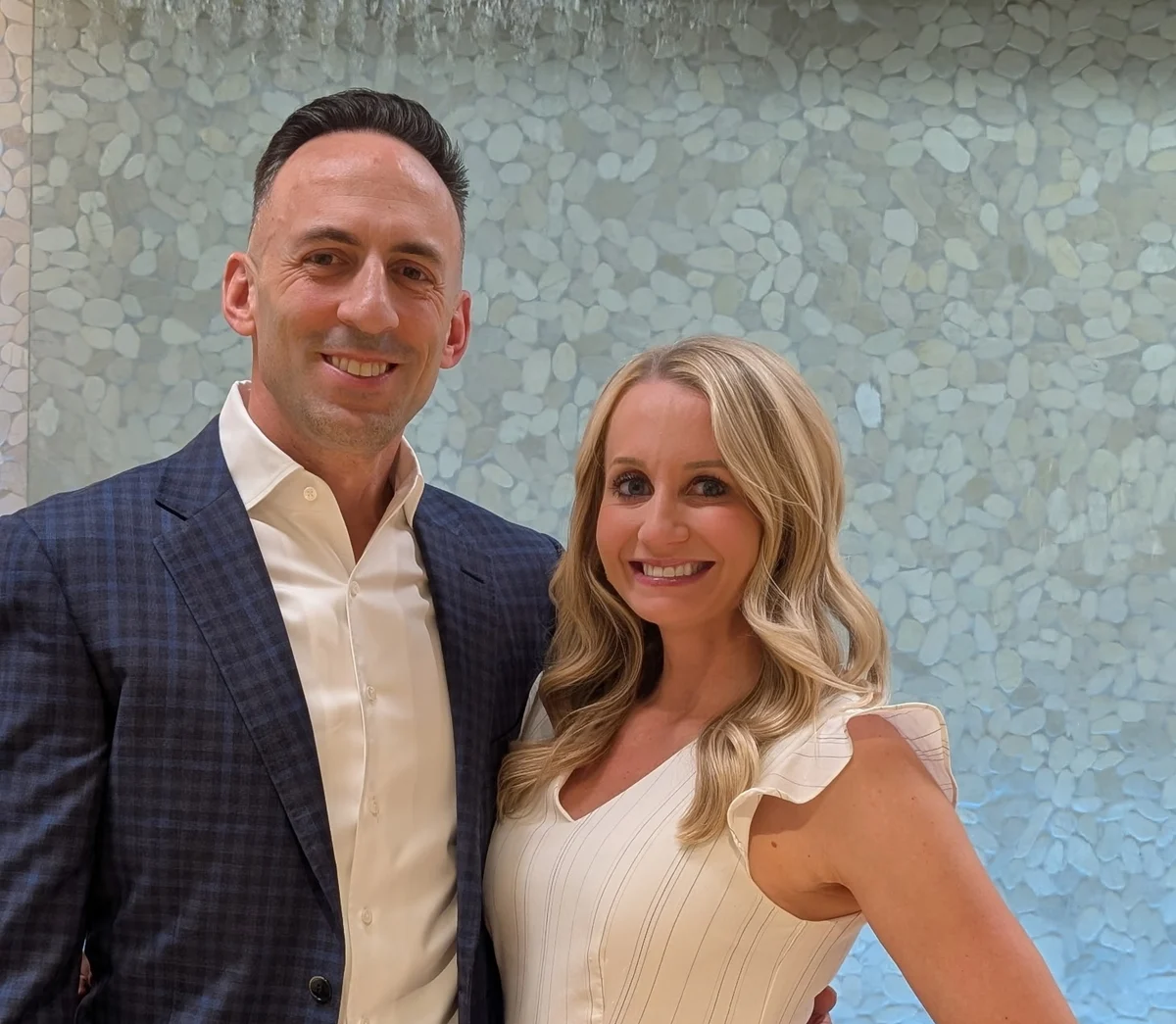
Dr. Stanga practiced in northern North Dakota for nearly 15 years, most of that time inside a hospital system, caring for a large population with very few specialists to choose from. He came to that work well trained. He did his pediatrics residency at Blank Children's Hospital in Des Moines and his allergy and immunology fellowship at Children's Mercy Hospital in Kansas City, and he is board certified in both Allergy & Immunology and Pediatrics.
The medicine was rewarding. What happened around it was harder to watch. People waited far too long for a first appointment, and the visits were rushed once they got in. Year after year, more of his patients struggled to pay for the care they needed, even though they had insurance.
Watching health care change
The numbers tell the story. In 2025 the average family premium for employer health coverage reached $26,993, up 6% in a single year and 26% over five years. Workers paid about $6,850 of that out of their own paychecks before they ever saw a doctor. Deductibles climbed right alongside premiums. More than a third of covered workers now carry a single-coverage deductible of $2,000 or more, and family deductibles are higher still (KFF, 2025).
Then come the copays and coinsurance. Care at a hospital-owned clinic often carries a facility fee on top of the doctor's charge, and one large analysis found that patients paid 109% more out of pocket for care in hospital outpatient departments than for the same care in a physician's office (Sen et al., 2022).
Dr. Stanga saw what that meant for real families. For a lot of people, insurance has turned into catastrophic coverage. It protects them if something terrible happens, but everyday outpatient care, like a specialist visit or a series of allergy shots, comes out of their own pocket until a large deductible is met. Many of them simply put off care they needed.
Why he left the hospital behind
Dr. Stanga didn't believe he could fix that from inside a hospital system. The prices, the billing and the pace of the day weren't his to change. Where and how he practiced was.
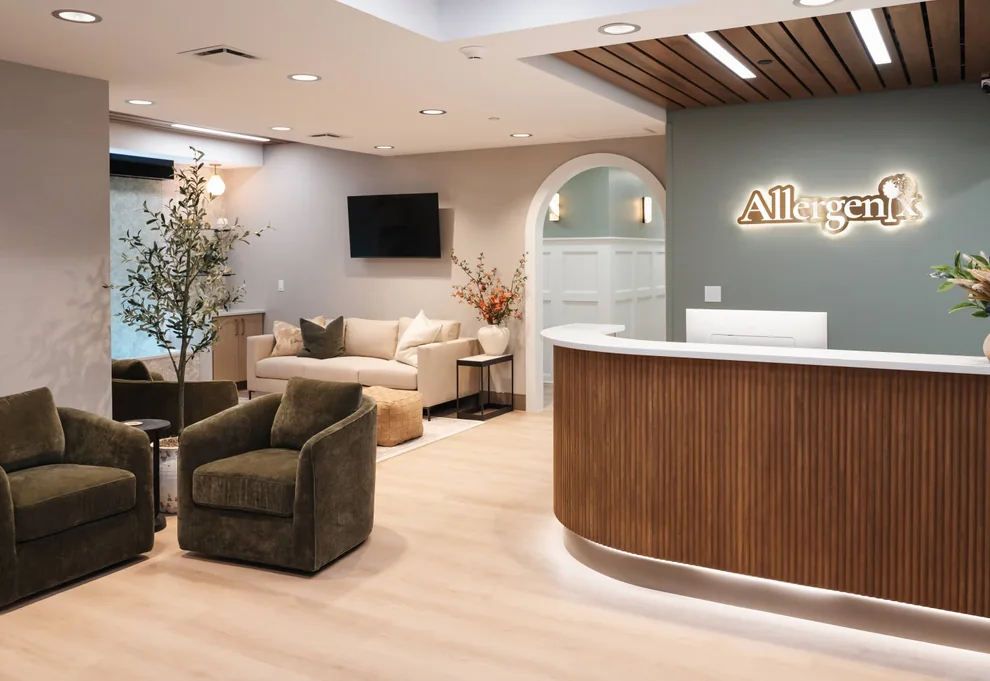
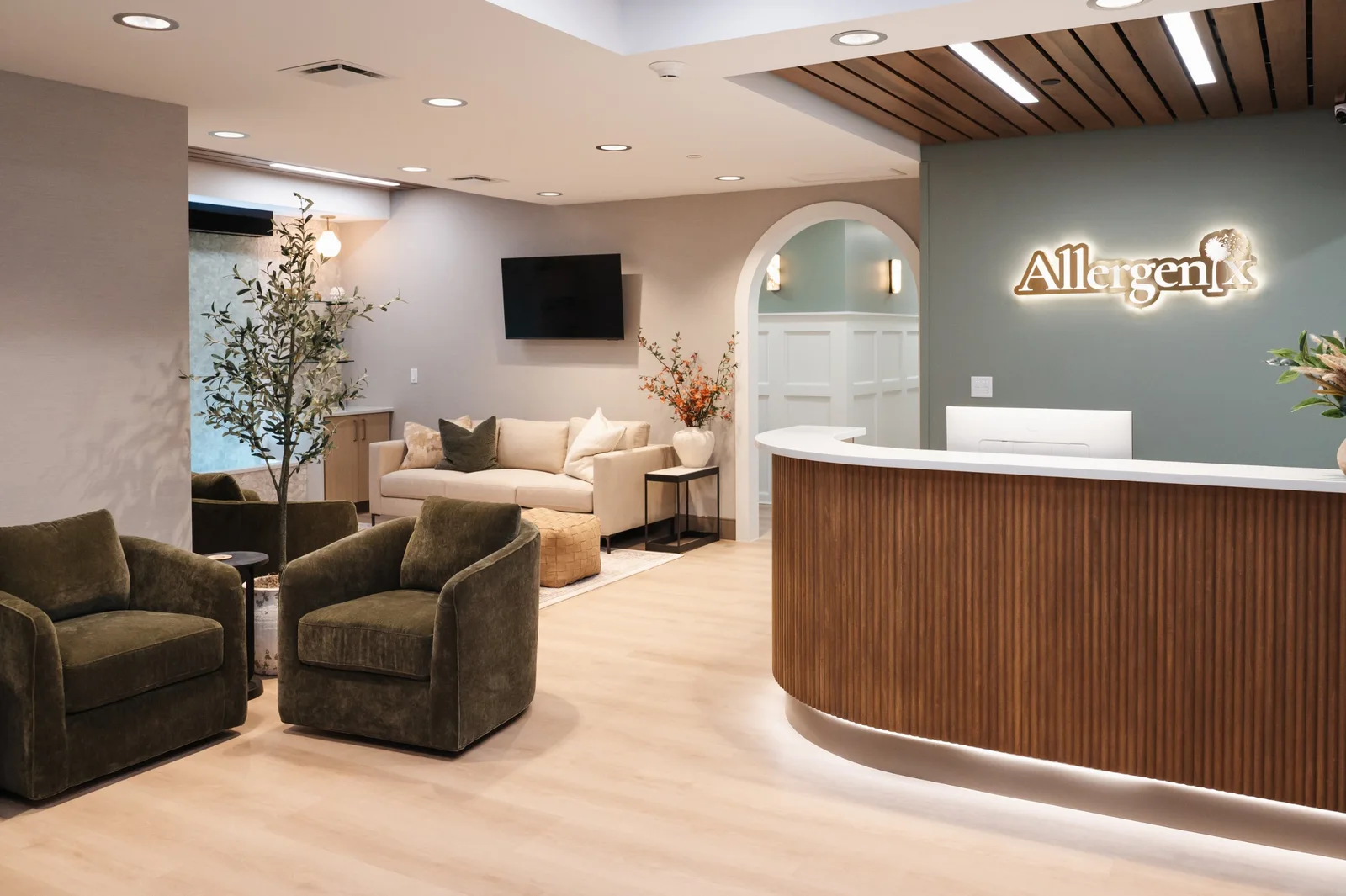
So he made a plan, with his family behind him every step of the way. He would come back to Iowa, where he had trained, and build a specialty practice from the ground up. The patient would know the price before the visit. The visit would be long enough to actually solve the problem. And the best treatments available wouldn't be out of reach just because no hospital in the region offered them. In 2026 he opened Allergenix in West Des Moines.
From direct primary care to direct specialty care
Direct primary care has been growing across the country for years. Patients pay their family doctor directly, usually through a simple membership, and get more time, easier access and prices they can see in return. Allergenix takes that same idea into specialty care. It is Iowa's Only Direct Specialty Care Allergy & Immunology Practice.
Patients pay the clinic directly, at published prices that are the same for everyone. There are no facility fees and no surprise bills. A new patient appointment runs 45 to 60 minutes, testing is read while you are still in the room, and Dr. Stanga handles every appointment himself. Most new patients are seen within the same week, without a referral.
For a family on a high-deductible plan, this is often the less expensive path. Until the deductible is met, they are usually paying the full negotiated rate for specialist care anyway, sometimes with a hospital facility fee attached. A clear, published price paid directly, often with HSA or FSA dollars, can cost less and comes with far more time with the doctor. Many families pair direct care with their insurance and keep the insurance for the emergencies it was designed for.
The icing on the cake
The new practice model was the foundation. The treatment Dr. Stanga was most excited to bring home was the icing on the cake.
He knows traditional allergy shots from the patient's chair. He spent close to 20 years getting them himself before he went through intralymphatic immunotherapy, usually called ILIT. It changed how he thought about what allergy treatment could be, and he wanted Iowa families to have it. At Allergenix it is called RapImmune®.
The cost difference alone makes a strong case. Over five years, a traditional allergy shot program for someone on a PPO plan can add up to roughly $17,000 to $21,000 once you count copays, facility fees, travel and time off work. The same analysis puts RapImmune® at about $3,851 (Allergenix, 2026). See the full cost comparison between RapImmune® and allergy shots, with every line item and source.
RapImmune®, up close
How it works
Allergy immunotherapy retrains the immune system with small, controlled doses of the things you are allergic to. Traditional shots deliver those doses under the skin of the arm, a little at a time, over three to five years. RapImmune® delivers them directly into a lymph node, where the immune system coordinates its response. Because the dose goes straight to where that learning happens, far fewer doses are needed.
Dr. Stanga places every injection himself under high-definition ultrasound, into a lymph node in the upper thigh near the hip crease. The extracts are the same FDA-approved allergen extracts used for allergy shots, custom blended for your allergy profile. The full course is three sessions over about eight weeks, with one or two injections per session.
Three visits instead of 100-plus injections
| Traditional allergy shots | RapImmune® | |
|---|---|---|
| Length of treatment | 3 to 5 years | About 8 weeks |
| Injections | 100+ | 1 to 2 per visit, 3 visits |
| Office visits over 5 years | About 109 | 3 |
| Time spent traveling and in clinic | 118+ hours | 3 visits |
| Who finishes the course | 16% to 34% complete three years in large studies | Nearly everyone in clinical trials |
| Estimated 5-year total cost | About $17,153 to $21,151 (PPO) | About $3,851 |
That completion row matters as much as the price. Allergy shots only work if people stay with them, and in large studies most don't. Among children on Florida Medicaid who started allergy shots, only 16% completed three years (Hankin et al., 2008). In the military health system, where shots cost patients nothing at all, about a third finished (Mendoza et al., 2023). Three visits is a commitment nearly anyone can keep.
Fewer chances for a serious reaction
Every allergy shot carries a small chance of a systemic allergic reaction, which is why patients wait in the clinic after each injection. A traditional course means more than 100 of those injections, and each one is another opportunity for a reaction. RapImmune® means three sessions.
The safety record in published ILIT trials has been reassuring. One review of 17 trials found that 98.4% of reported side effects were mild (Werner & Bosso, 2021), and across 15 randomized trials including 582 patients there were two cases of anaphylaxis (Wang et al., 2023). Serious reactions are rare with any immunotherapy, but they are possible, so every RapImmune® injection is ultrasound-guided and conservatively dosed, followed by observation, with epinephrine immediately on hand.
What it feels like
Most patients are surprised. The lymph node itself has very little sensation, and most people say the injection hurts less than a blood draw. Each session is a short visit, and there is no recovery time afterward.
Who it's for
RapImmune® treats environmental allergies to pollen, dust mites, pets and molds. It's a strong fit for people who considered allergy shots but couldn't commit to years of appointments, for people whose work or travel makes frequent visits impossible, and for people already on shots or drops who aren't getting relief. Older children can be candidates too, depending on maturity.
It isn't right for everyone. It isn't used during pregnancy, with uncontrolled asthma, or with a beta blocker unless there is a plan to address it, and it doesn't treat food or venom allergies. Part of the first visit is an honest conversation about whether you are a good candidate.
The evidence, plainly
ILIT has been studied in randomized trials for nearly two decades. In a landmark 2008 trial, three lymph node injections over two months produced results comparable to three years of conventional shots that took 54 injections (Senti et al., 2008). Pooled analyses since then show a moderate reduction in symptoms and medication use, along with better quality of life, compared with placebo (Wang et al., 2023).
The evidence base is smaller and newer than the century of research behind allergy shots, with fewer than a thousand trial participants in total (Wang et al., 2023), and placing the extract in a lymph node is an off-label use of FDA-approved products. Dr. Stanga walks through all of it at the consultation, because patients deserve the full picture. See how RapImmune® works.
A note on food allergies
The same principle, teaching the immune system to tolerate something it overreacts to, drives the clinic's food allergy program. Food sublingual immunotherapy, or Food SLIT, uses tiny amounts of the food protein in drops held under the tongue each day at home, with dose increases supervised in the clinic.
The goal is desensitization. Raising the amount it takes to cause a reaction makes an accidental bite at school or a birthday party far less likely to become an emergency. In a long-term study of children with peanut allergy, about two-thirds could safely eat a meaningful amount of peanut protein after several years of daily drops (Kim et al., 2019). Food SLIT isn't a cure, and families still carry epinephrine. For many parents, though, it brings a kind of peace of mind they haven't had in years. Learn about food allergy care at Allergenix.
What it means for families across Iowa
For most people in Iowa, allergy immunotherapy has meant years of shots and years of copays. Dr. Stanga set out to change that. Allergenix is the only ILIT provider in Iowa, Minnesota, Nebraska, North Dakota, South Dakota and Wisconsin, so a family from Sioux City or Cedar Rapids can now finish a course of RapImmune® in about two months, at a price they know up front.
It's one clinic in West Des Moines. It is also proof that specialty care can work outside the hospital system. For the families who have found it, that has quietly changed what they expect from health care.
Wondering if RapImmune® or Food SLIT could work for you? Most new patients see Dr. Stanga within the same week, with no referral. Book online in about two minutes, or call the clinic at 515-644-8448.
References
- Allergenix. (2026). RapImmune® vs. allergy shots: five-year cost comparison. https://www.allergenix.com/immunotherapy/rapimmune-vs-allergy-shots
- Hankin, C. S., et al. (2008). Allergy immunotherapy among Medicaid-enrolled children with allergic rhinitis: patterns of care, resource use, and costs. Journal of Allergy and Clinical Immunology.
- KFF. (2025). 2025 Employer Health Benefits Survey.
- Kim, E. H., et al. (2019). Long-term sublingual immunotherapy for peanut allergy in children: clinical and immunologic evidence of desensitization. Journal of Allergy and Clinical Immunology.
- Mendoza, et al. (2023). Allergen immunotherapy completion in the military health system.
- Sen, et al. (2022). Site-of-service price differences across 102.7 million claims. Health Affairs.
- Senti, G., et al. (2008). Intralymphatic allergen administration renders specific immunotherapy faster and safer: a randomized controlled trial. Proceedings of the National Academy of Sciences.
- Wang, et al. (2023). Intralymphatic immunotherapy for allergic rhinitis: systematic review and meta-analysis of 15 randomized trials, 582 participants.
- Werner, M. T., & Bosso, J. V. (2021). Intralymphatic immunotherapy for allergic rhinitis: a systematic review and meta-analysis. Allergy and Asthma Proceedings.
Common questions
Is RapImmune® right for me?
It's designed for people with pollen, dust mite, pet or mold allergies who want lasting relief without years of shots. Dr. Stanga decides after your evaluation and testing, and he will tell you plainly if another option fits you better.
How much does RapImmune® cost?
The treatment course is one flat fee, with financing available. Current pricing is on the pricing page, and the cost comparison shows how it stacks up against five years of allergy shots.
Is Food SLIT a cure for food allergies?
No. The goal is desensitization, which lowers the risk that a small accidental exposure causes a serious reaction. Families keep epinephrine on hand throughout.
Do I need a referral?
No. You can book online directly, and the clinic confirms your visit within one business day.
Does Allergenix take insurance?
Allergenix doesn't bill insurance. You pay the clinic directly at published prices, and HSA, FSA and patient financing are accepted. Outside labs, imaging and prescriptions are billed by those providers, who may run them through your insurance.
Also on the blog
- Allergy CareExpert Thanksgiving Food Allergy TipsPractical thanksgiving food allergy tips from a West Des Moines allergist: hidden allergens, what to ask your host, and keeping epinephrine ready.

- Allergy TestingPenicillin Allergy Testing: How It Works and Why It MattersLearn how penicillin allergy testing works, who should get tested, and why removing an incorrect allergy label can improve antibiotic treatment.
- Allergy CareWhat Is Sublingual Immunotherapy for Food Allergy?Learn how sublingual immunotherapy for food allergies works, including benefits, risks, SLIT vs. OIT, treatment eligibility, and costs.
A different approach to allergy treatment starts here
Book your visit online in a few minutes and pick a time that suits you. Have a question first? Send us a message or call the clinic.